

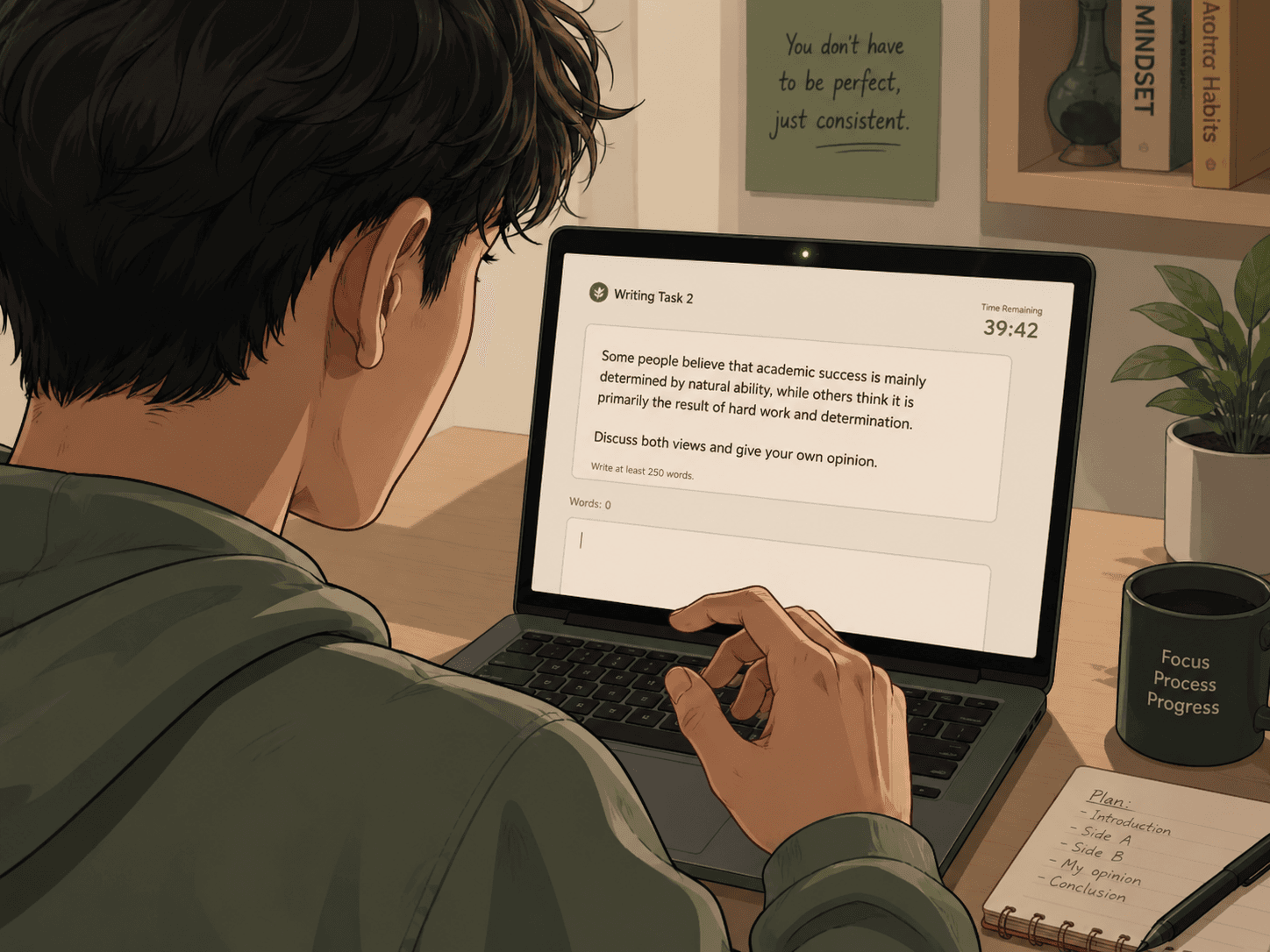
A student can know the rules, study honestly, open the test on time, and still feel like the exam has begun with suspicion. That is the strange emotional weight of remote proctoring. The software may be there to protect academic integrity, but many students experience it as something more personal: a camera in their room, a microphone listening, a system watching their eyes, screen, movements, tabs, pauses, and background noise.
Why Remote Proctoring Feels Different From Classroom Proctoring
Students are used to being supervised during tests. A teacher walking around a classroom is not new. Remote proctoring feels different because it moves supervision into private space. The student is not simply taking a test under observation. They may be taking it in a bedroom, kitchen, dorm room, or shared apartment. Even when the system is working as designed, the student may wonder: Is someone watching me live? What happens if I look away? Who sees the recording? Will a software flag make my teacher think I cheated?
The Stress of 'Performing Normal'
One of the more overlooked problems with remote proctoring is that students may start managing their behavior for the software instead of focusing on the questions. They try not to move too much. They avoid looking away. They worry about a sibling walking into the room. They wonder whether reading aloud, fidgeting, stretching, or glancing at the ceiling might look suspicious. This cognitive load is real. A student who spends the exam trying not to appear suspicious has less attention left for the exam itself.
“Remote proctoring is not only a technical workflow. It is a student experience.”
Students Are Not All Worried About the Same Thing
Some worry about privacy. Some worry about being falsely accused. Some worry about technical failure. Many students do not object to proctoring because they want an easier exam. They want fairness. They want to know that the person who studied is not being punished while someone else uses a second device or group chat. But if students believe the proctoring system is invasive and still easy to bypass, trust suffers from both directions: 'Why am I giving up privacy if the system does not actually protect fairness?'
Fairness Is More Than Catching Cheating
- Honest students are not treated as guilty by default
- Students with weak internet are not punished for connection failures
- Students with disabilities are not flagged for accommodation-related behavior
- Students in shared homes are not penalized for background movement or noise
- Students understand the rules before the test starts and can explain flagged events
- Teachers review context before drawing conclusions
The Fear of False Accusation
For many students, the scariest part of remote proctoring is not being watched. It is being misunderstood. A camera loses the student's face. The internet drops. A student with anxiety looks away often. A student with a disability needs to move or pause. Software can flag these events. But a flag is not a fact. That distinction should be written into every remote proctoring policy. Students need to hear clearly that a flag means 'review this,' not 'this student cheated,' before the exam, not after a panic email.
Why Communication Changes the Experience
A lot of student stress comes from uncertainty. If students do not know what the system records, what triggers flags, or how technical issues are handled, they fill in the blanks with worst-case scenarios. Faculty can reduce that stress with plain language: 'This exam uses tab-switch detection, but camera monitoring is off.' 'Your test may generate flags, but flags are reviewed by a person.' 'If your connection drops, document what happened and contact us.' That kind of clarity does not weaken integrity. It strengthens trust.
What Faculty and Counselors Should Listen For
When students complain about proctoring, it is easy to hear only resistance. Listen more carefully. A student saying 'this feels creepy' may be raising a privacy concern. A student saying 'I can't test at home' may be describing an equity issue. A student saying 'the camera makes me panic' may need an accommodation conversation. A student saying 'people can still cheat anyway' may be expressing a fairness concern, not asking for less accountability.
A Calmer System Is Not a Weaker System
Proctorly is built for schools that want test integrity without making surveillance the default. By default, tests can run with cameras off. Proctorly organizes signals for teacher review rather than treating every flag as proof. That approach respects both sides: teachers get enough information to protect honest students and uphold exam standards, while students know that ordinary human behavior, disability needs, technical failure, or home interruptions will not automatically become accusations. Students are more likely to trust a proctoring process that treats them like people, and that trust matters for integrity.
Sources
- 1.Balash et al.: Examining the Examiners: Students' Privacy and Security Perceptions of Online Proctoring Services (Georgetown Security Lab)
- 2.Meulmeester et al.: Medical Students' Perspectives on Online Proctoring (PMC)
- 3.Oeding: The Mixed-Bag Impact of Online Proctoring Software in Undergraduate Courses (Open Praxis)
- 4.Balash et al.: Educators' Perspectives of Using Online Exam Proctoring (USENIX Security)