
The easiest way to make an online exam feel secure is to watch students harder. It is not always the best way. A camera can show whether a student is sitting in front of a screen. It cannot prove whether the exam actually measures understanding. A lockdown browser can reduce certain kinds of cheating, but it cannot turn a weak multiple-choice test into a meaningful assessment. The better question is: can the assessment itself make cheating less useful? In many cases, yes.
Why Heavy Proctoring Should Not Be the First Move
Online proctoring has its place, especially for high-stakes exams, placement tests, and situations where identity verification matters. But when every quiz is treated like a bar exam, the classroom culture changes. Students begin to feel presumed guilty. Teachers inherit long lists of flags to review. Technology problems become integrity problems. A stronger assessment plan reduces the reward for cheating before the proctoring tool ever turns on.
Open-Book Exams Are Not 'Easy' Exams
Open-book exams are often misunderstood. A well-designed open-book exam simply admits what is already true: in most real work, people have access to tools, notes, references, and examples. The question is whether they know what to do with them. A weak closed-book question asks 'What is the definition of photosynthesis?' A stronger open-book question asks students to explain how changing light exposure would affect a plant in a specific environment, using evidence from the unit. One rewards recall. The other tests understanding.
“If every student must connect the course concept to a specific case, explain their reasoning, or respond to a unique prompt, cheating becomes harder and learning becomes more visible.”
Use Projects and Portfolios When the Goal Is Deeper Learning
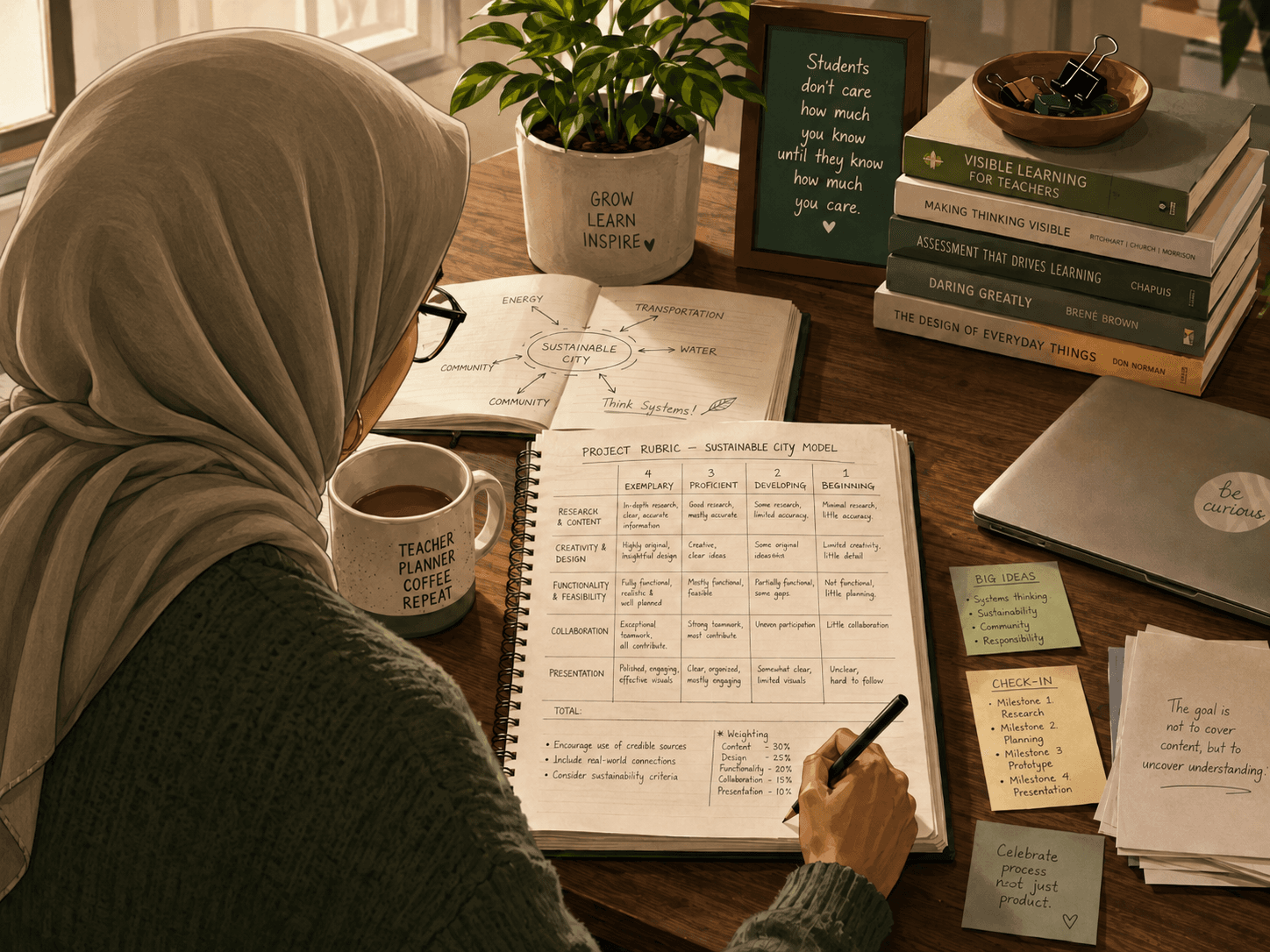
Some learning goals do not belong in a timed test. A science class might ask students to design an experiment, explain the method, record observations, and reflect on what the results show. A programming class might require a project with checkpoints, version history, a short explanation, and a live walkthrough. Portfolios are especially useful because they show growth: instead of seeing one performance on one test day, the teacher sees drafts, revisions, reflections, and final work. That makes dishonesty harder to hide.
Add Oral Checks Without Turning the Course Into an Interrogation
Oral presentations, short interviews, and live explanations can discourage cheating because students must explain their work in their own words. A five-minute follow-up can be enough: ask the student to explain one decision they made, why they chose a certain method, or what they would change if given more time. If the student understands the work, the conversation usually shows it.
Break the Big Exam Into Frequent Low-Stakes Checks
A single high-stakes exam creates a bad bargain: one day, one score, one large incentive to cheat. Frequent low-stakes quizzes change the pressure. They give students more chances to practice, more feedback along the way, and fewer reasons to panic. When students know one quiz will not ruin them, the temptation to cheat drops. When teachers have many data points, one suspicious moment matters less.
- Weekly reading quizzes and short concept checks
- Exit tickets and reflection prompts
- Randomized question banks with shuffled answer choices
- One-question warmups and polls with short explanations
- Practice problems and mini oral responses
Make Collaboration Honest
Students cheat more easily when the rules around help are vague. Can they study together? Can they use notes? Can they use AI for brainstorming? If the instructor does not define the line, students may draw it for themselves. A better approach is to design some assignments where collaboration is allowed and useful, then define clearly where individual work begins. One useful pattern is group work plus individual accountability: students may collaborate on a project, but each student submits a short reflection or individual application question.
Build an Academic Culture, Not Just a Punishment System
Technology can reduce opportunities for misconduct. It cannot build integrity by itself. Students need to understand what academic honesty means in a specific course, not in a vague institutional way, but in practical terms. What counts as unauthorized help? When is AI acceptable? What does proper citation look like? What should a student do instead of cheating when confused before a deadline? A clear conversation before an exam is better than a pledge students click without reading.
Where Proctoring Still Fits
Creative assessment strategies reduce the need for heavy proctoring, but they do not remove it entirely. A district benchmark, final exam, placement test, or make-up assessment may require a more secure testing environment. The question is not whether to use proctoring. It is how to use it with restraint. Proctorly is built around the idea that online integrity does not have to begin with cameras on. Teachers choose when camera or microphone features are actually needed, instead of treating invasive monitoring as the starting point for every exam.
Sources
- 1.Western Washington University: Alternative Assessment Options for Remote Instruction
- 2.UVA Learning Design: Encouraging Academic Integrity Online
- 3.Carnegie Mellon Eberly Center: Low-Stakes Assignments
- 4.Iowa State University: Study Shows Quizzes Improve Academic Performance
- 5.Zhao et al.: Honor Code Reminders and Cheating (ScienceDirect)
- 6.Janinovic et al.: Honor Code Policy Study (SAGE Journals)